

Lead projects
be circular works on projects along the circular healthcare loop. Each one is part of a bigger goal.
PRODUCT USE | COLLECTION | MEDICYCLE | PRODUCTION | TRACEABILITY
Besides Medicycle, be circular also works with partners on further projects that extend the loop.
COSARECYCLING | END-OF-LIFE RECOVERY
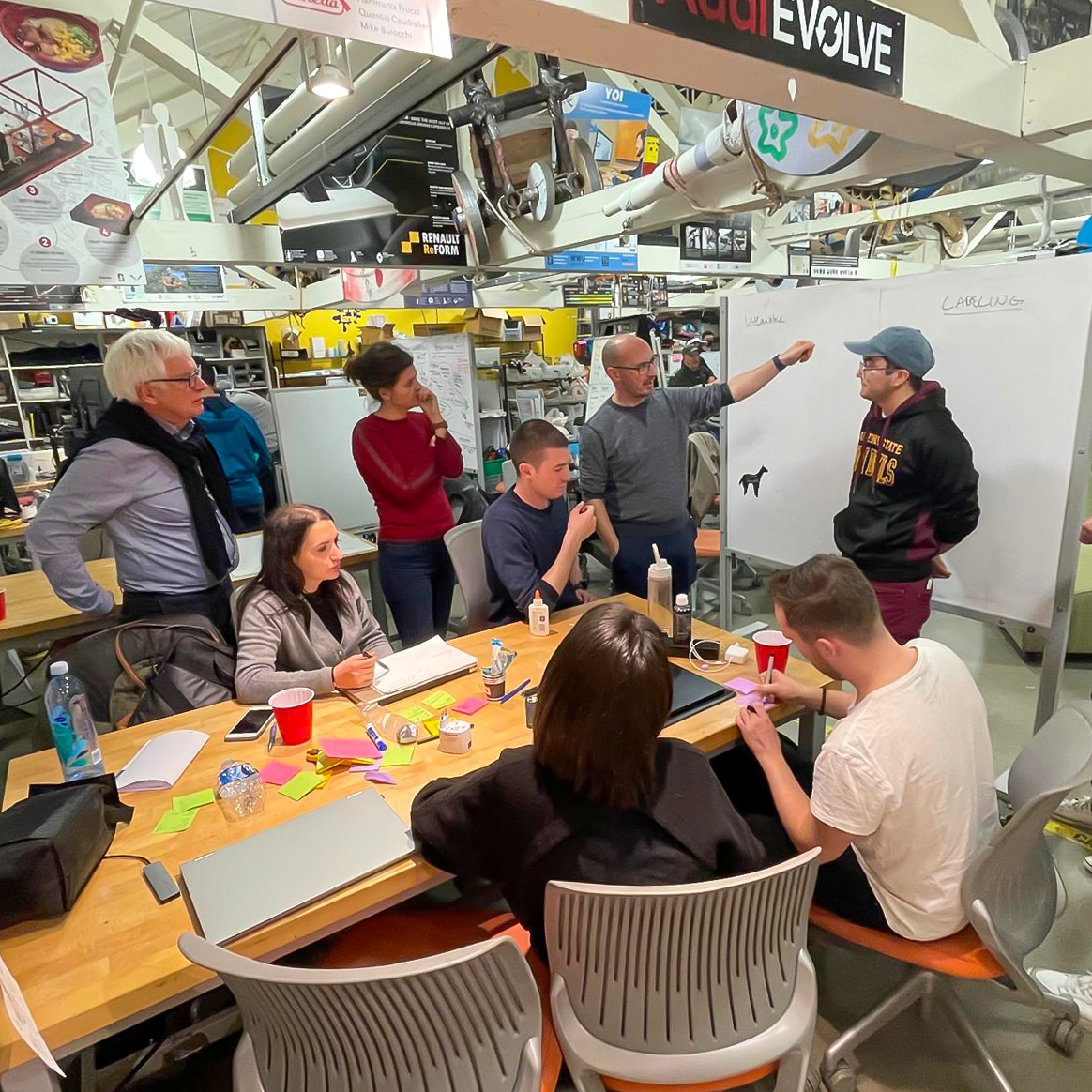
Medicycle — Material Management
Medicycle is be circular’s material management system, from sorting and decontamination through demanufacturing to recovered material that is ready for new products. It is a system of projects that work together.
The closer a material stays to the source, the cleaner and more valuable it is. Medicycle aims to keep every stream pure and traceable, so that materials take the shortest path back to production and as little as possible is incinerated.
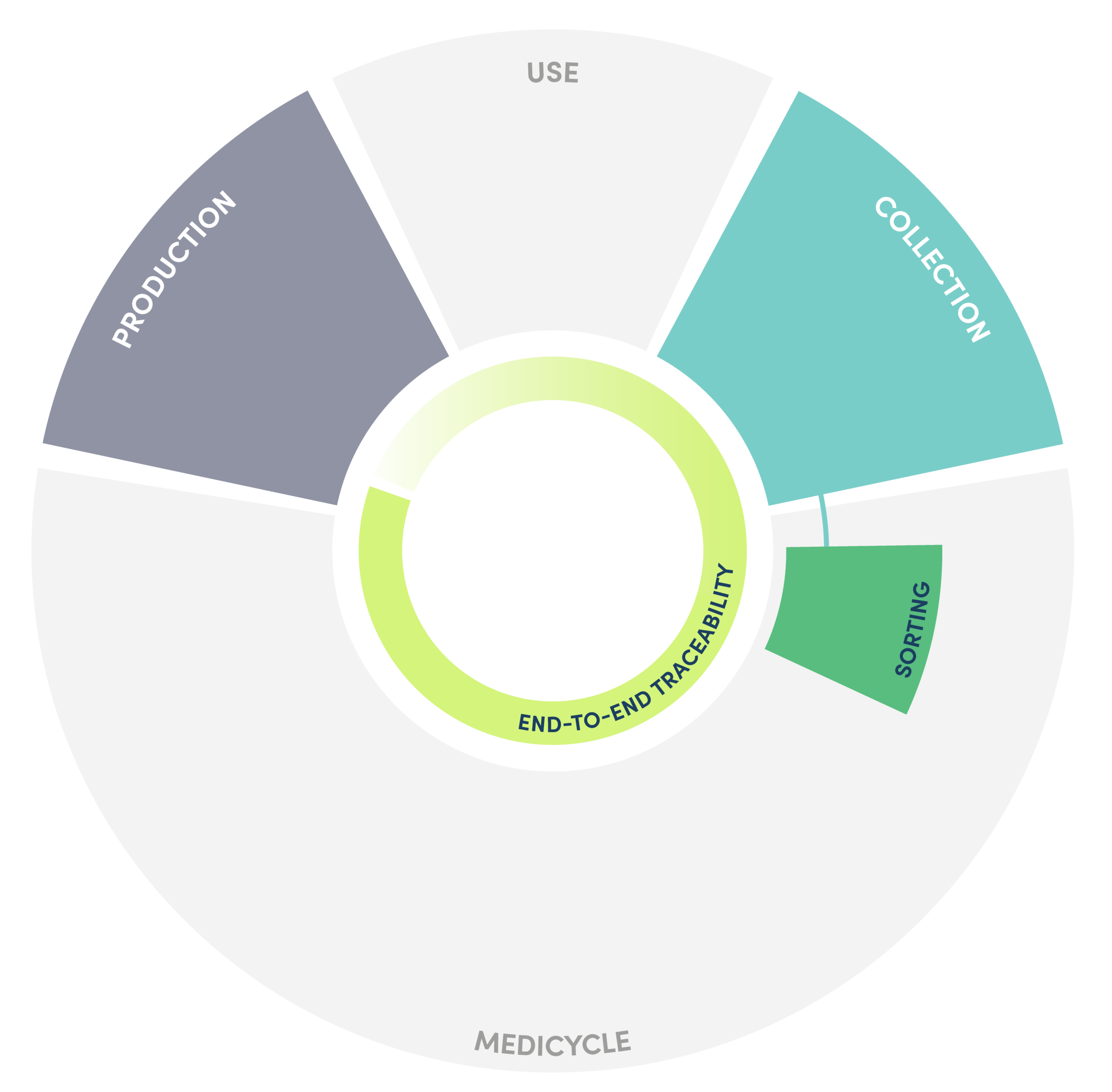
Sorting & Decontamination
Medical waste from hospitals, practices and care homes is almost entirely incinerated today, and with it a significant share of high-value material and devices.
Medicycle separates that material where the waste already arrives.At the disposal site, containers of several formats are opened automatically, decontaminated and then sorted zero-touch using robotics, machine vision and machine learning. No hand ever reaches in. Nothing changes on the ward: no new bin and no new habit for nursing staff or patients.
Result: Clean-stream polymers, borosilicate glass, metals and intact assemblies and devices returned to industrial and, in the longer term, medical supply chains.
Contribution from: Helbling Technik, ZHAW, Stanford University
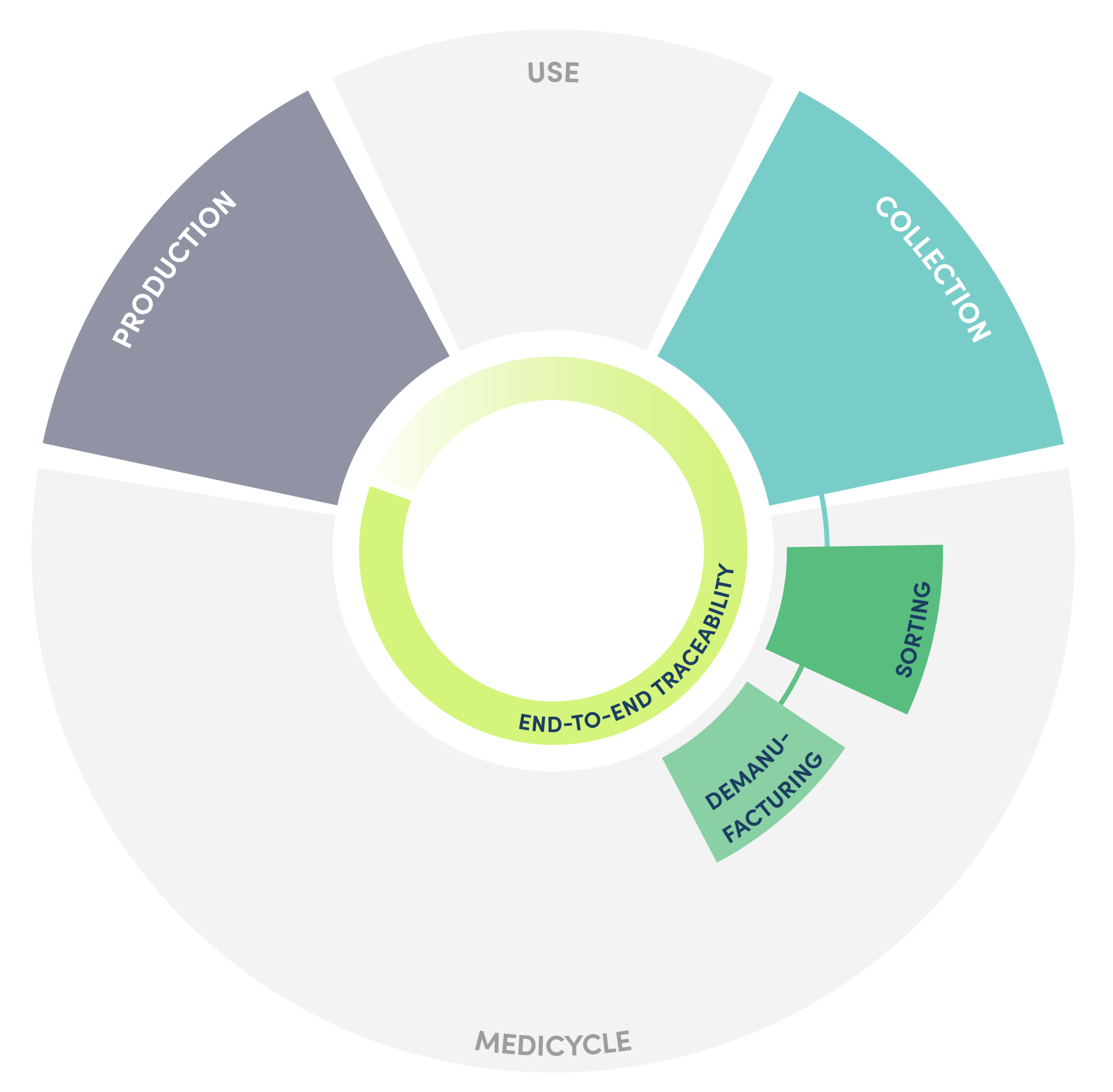
Demanufacturing of assembled devices
Shredding medical devices would destroy the material value. Demanufacturing takes the device apart down to component level and separates medical-grade polymers, metal and borosilicate glass into pure fractions that are ready for re-use. The modular demanufacturing unit can be adapted to specific needs.
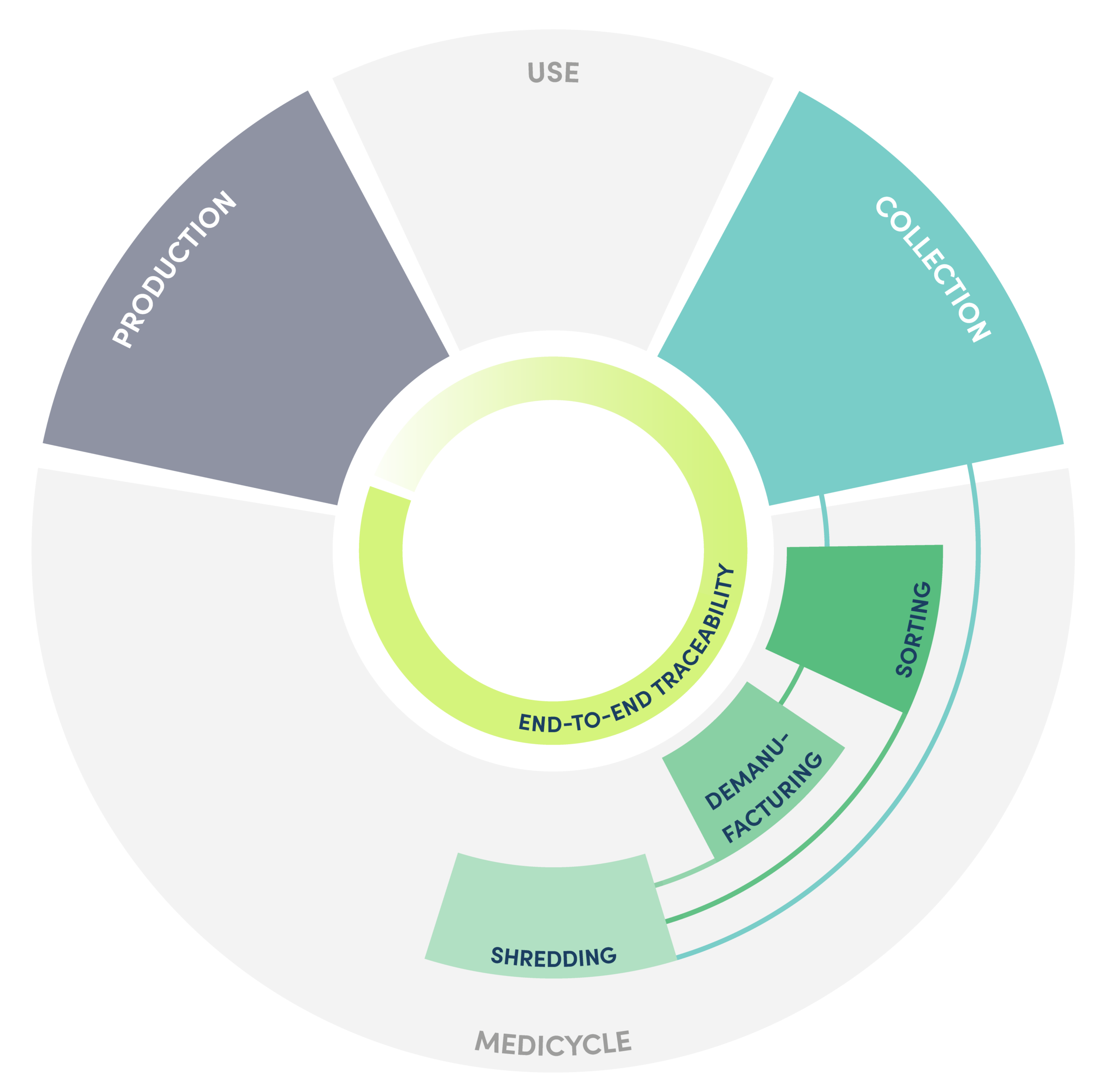
Shredding & Material Recovery
Not every material stream can be sorted or disassembled, but that’s no reason to incinerate it. Where clean separation isn’t possible, we integrate established treatment solutions to recover as much useful material as possible and bring it back for industrial use.
Result:The shredded material fractions are sorted physically and by spectroscopy to create a new resource stream for industry and reduce incineration.
Contribution from: Healthcare Collective, Cosanum, InnoGroup
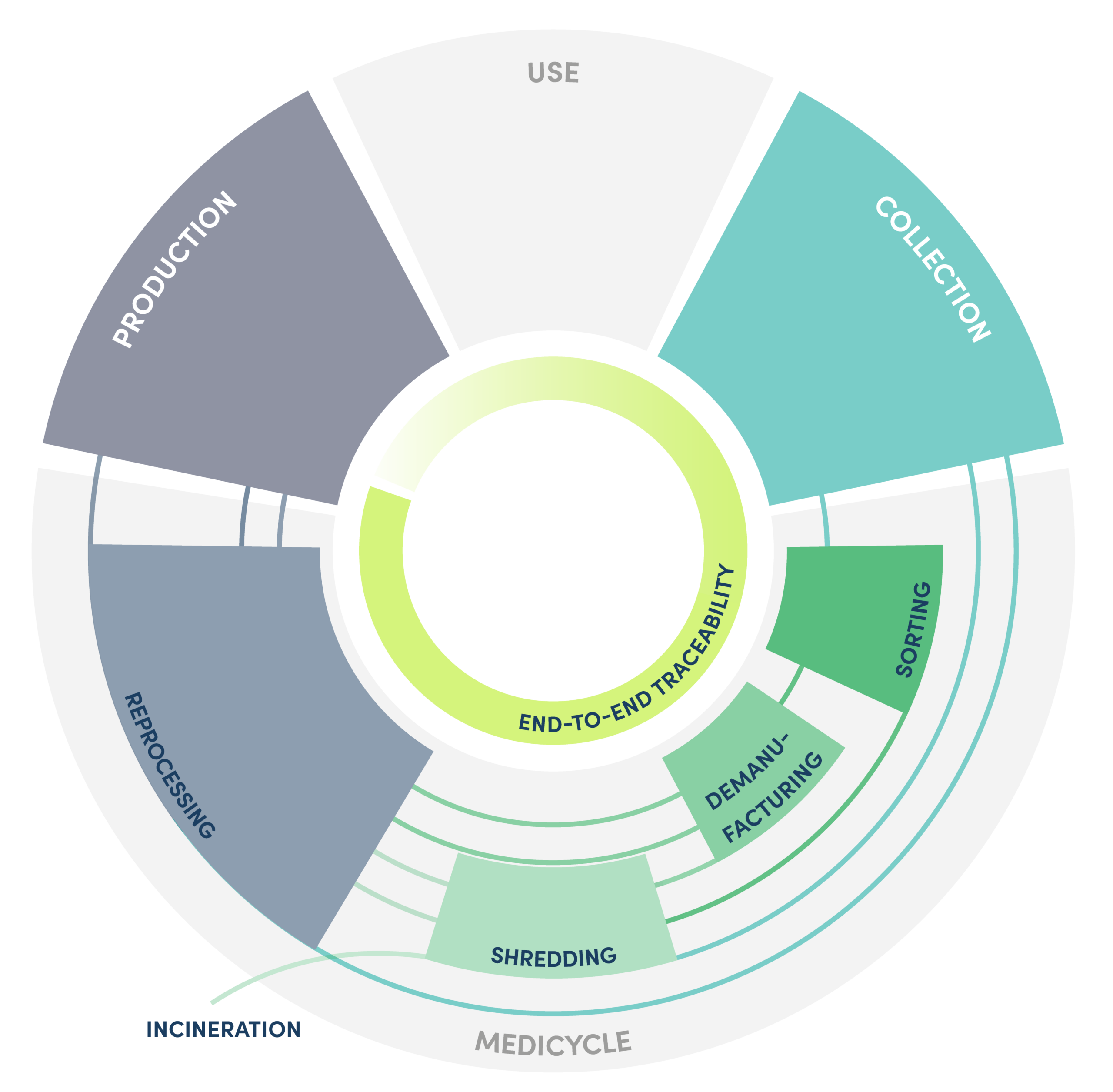
Reprocessing, Recycling & Remanufacturing
Recovered materials follow different paths depending on their quality and composition. Pure polymers are regranulated, metals recycled, borosilicate glass and reusable devices remanufactured. Where mixed fractions remain, additional sorting using spectroscopy recovers what can still be saved. What cannot be recovered mechanically goes to chemical recycling, significantly reducing incineration and bringing high-value materials back to industry.
First step: High-value materials with full traceability for industry partners across different sectors.
Second step: Circular materials for the Pharma and MedTech industry.
End-to-End Traceability: The digital layer
Batch-level traceability across every station of the loop supports ESG reporting, compliance and the EU Digital Product Passport. It is the data infrastructure that makes the loop verifiable.
Case studies
End-of-Life Recovery
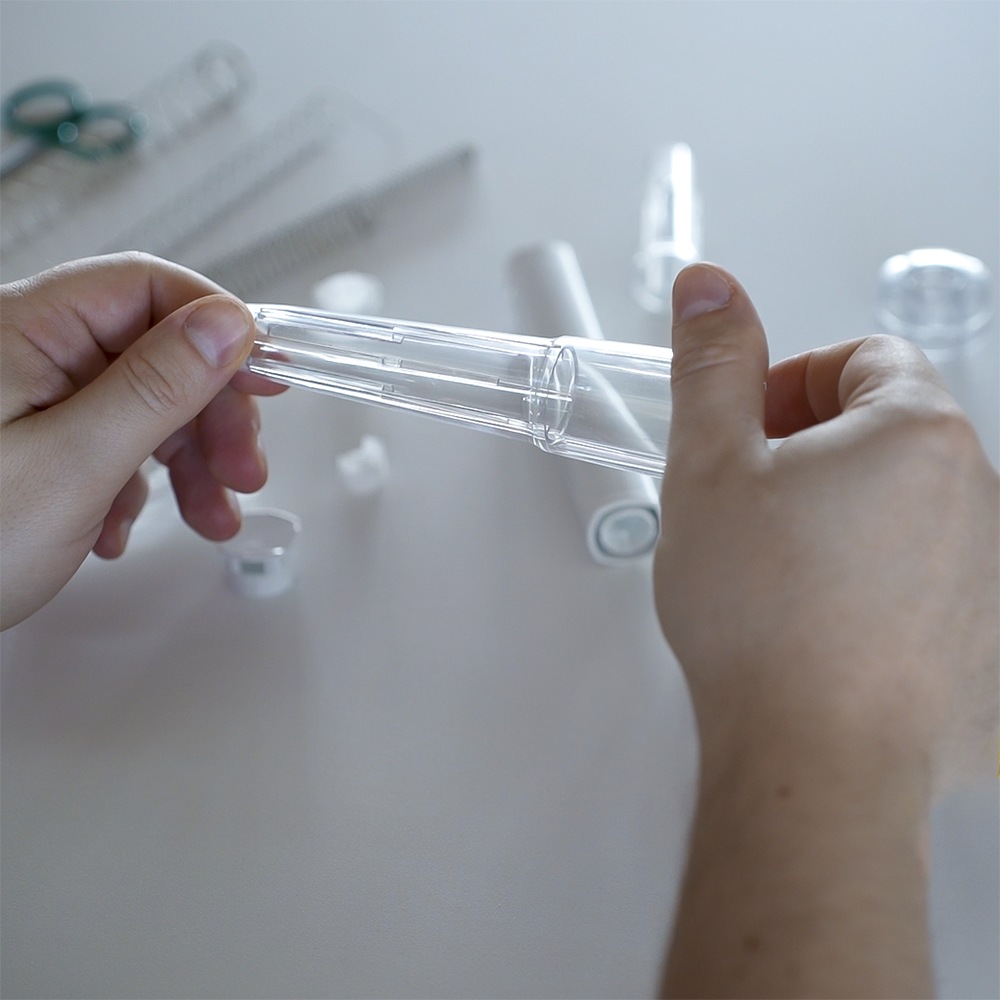
Expired implants, instruments and medical products still contain high-value materials: titanium, high-grade steel and precious metals. The goal is to recover them and return them to medical use. As a first step, recovered materials re-enter industrial supply chains where the same materials are already widely used. That is a pragmatic start towards closing the loop within healthcare.